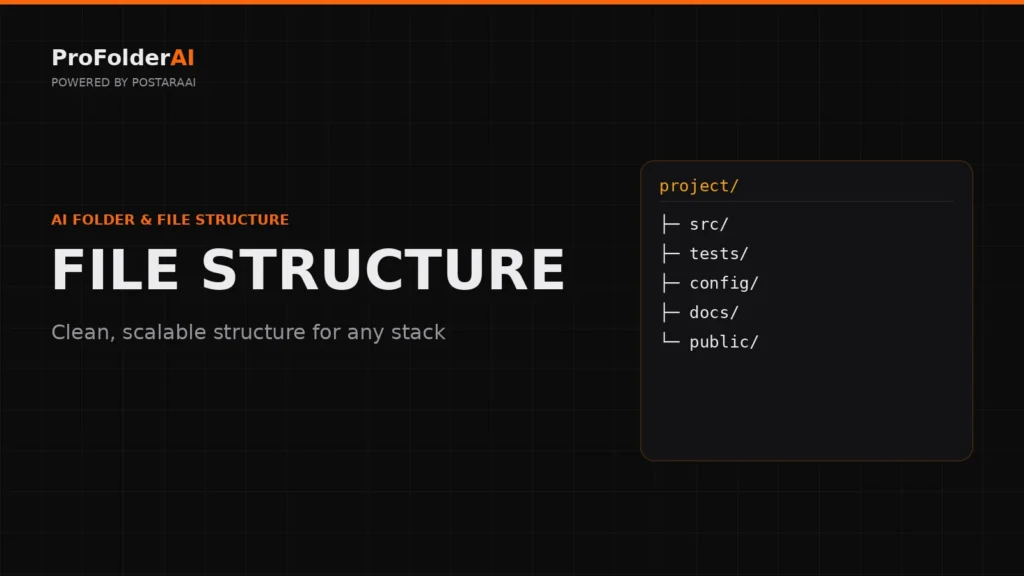
The full stack project structure is crucial for developers, indie hackers, and teams aiming for efficiency and organization. A well-defined structure facilitates better collaboration, easier maintenance, and streamlined development workflows. In this article, we will explore the various aspects of structuring your full stack projects effectively.
Understanding the components of a full stack project structure helps ensure that your applications are modular, scalable, and easy to navigate. This guide will provide insights into best practices and give you a solid foundation for your next project.
As we delve deeper into the topic of full stack project structure, you will discover how to organize your folders and files, which tools to use, and how to implement best practices that benefit both solo developers and teams alike.
What is a full stack project structure?
A full stack project structure refers to the organized layout of files and folders in a software application that encompasses both front-end and back-end components. It aids in maintainability and collaboration.
A full stack project typically includes a front-end (client-side) and a back-end (server-side). The front-end is responsible for the user interface and user experience, while the back-end handles data processing, storage, and business logic. Understanding how to structure these components is key to building effective applications.
Why is a well-defined structure important?
A well-defined structure improves collaboration, makes code easier to maintain, and enhances the overall development process. It also helps onboard new team members more quickly.
A full stack project structure serves as a roadmap for developers. Here are several reasons why a well-defined structure is essential:
- Improved Collaboration: Team members can easily find and understand code.
- Easier Maintenance: A clear structure allows for quicker updates and bug fixes.
- Onboarding New Developers: New team members can grasp the project layout faster.
What are the key components of a full stack project structure?
The key components of a full stack project structure typically include directories for front-end code, back-end services, configuration files, and documentation. These components ensure a modular design.
<pA typical full stack project structure might look like this:
project-root/
├─ client/
│  ├─ src/
│  │  ├─ components/
│  │  ├─ assets/
│  │  └─ App.js
│  └─ package.json
├─ server/
│  ├─ controllers/
│  ├─ models/
│  ├─ routes/
│  └─ server.js
├─ config/
├─ docs/
└─ README.md
This structure separates the front-end and back-end code, making it easier to manage both sides of the application. Each folder has a specific purpose, which enhances maintainability.
How can I organize my front-end and back-end folders?
Organizing front-end and back-end folders involves creating distinct directories for components, assets, routes, and services. This separation enhances clarity and maintainability.
Front-end Organization
- src: Contains all source files.
- components: Holds reusable UI components.
- assets: Stores images, styles, and other static files.
Back-end Organization
- controllers: Manages application logic.
- models: Defines data structures.
- routes: Handles API endpoints.
What tools can help with managing full stack projects?
Tools like ProFolderAI help generate clean project structures, while version control systems like Git and dependency managers like npm streamline collaboration and package management.
Several tools can aid in managing full stack projects effectively:
- ProFolderAI: Use this tool to generate optimal project structures.
- Git: For version control and collaboration.
- npm: For managing dependencies in JavaScript projects.
How do best practices enhance full stack project structure?
Best practices enhance project structure by promoting consistency, readability, and maintainability. They help ensure that code is organized and follows established conventions.
Adopting best practices can significantly improve your full stack project structure:
- Consistent Naming Conventions: Use uniform naming for files and folders.
- Modular Design: Break down code into reusable components.
- Documentation: Maintain updated documentation for clarity.
What are the common pitfalls to avoid in full stack project structure?
Common pitfalls include cluttered folder structures, inconsistent naming conventions, and lack of documentation. These issues can lead to confusion and hinder collaboration.
Avoid these pitfalls to maintain a clean and effective project structure:
- Cluttered Folders: Avoid putting unrelated files together.
- Inconsistent Naming: Stick to one naming convention across the project.
- Lack of Documentation: Document your structure and code to facilitate understanding.
Conclusion
In conclusion, a well-organized full stack project structure is essential for developers and teams aiming to build scalable and maintainable applications. By understanding the key components and following best practices, you can create a project layout that enhances collaboration and efficiency.
Utilizing tools like ProFolderAI can further streamline the process of structuring your projects. By adhering to the principles discussed in this article, you will be better equipped to tackle full stack development challenges with confidence and clarity.
Call to Action
Generate a production-ready structure for your next project instantly with ProFolderAI — describe what you are building and download a clean, ready-to-use folder tree.
Open the generator See plans & pricing →
ProFolderAI is part of PostaraAI — a suite of AI-powered tools for developers, creators, and small businesses.
About this article
- Written and maintained by the ProFolderAI team, part of PostaraAI.
- Published June 26, 2026.
- Questions or corrections? Contact the team.

Bineesh Koyente Thodika is the founder of ProFolderAI and PostaraAI. He builds AI-powered developer tools, WordPress solutions, and software products that help developers, agencies, and indie hackers launch projects faster.
Keep reading
File Structure Best Practices for Effective Project Management
Learn file structure best practices to maintain organized projects, enhancing collaboration and efficiency for developers and teams.
Folder Structure Best Practices for Developers and Teams
Discover folder structure best practices to enhance project organization. Improve collaboration and efficiency with clear guidelines.
Mastering Software Project Folder Structure for Success
Crafting a solid software project folder structure enhances organization and efficiency. Learn best practices to streamline your development workflow.