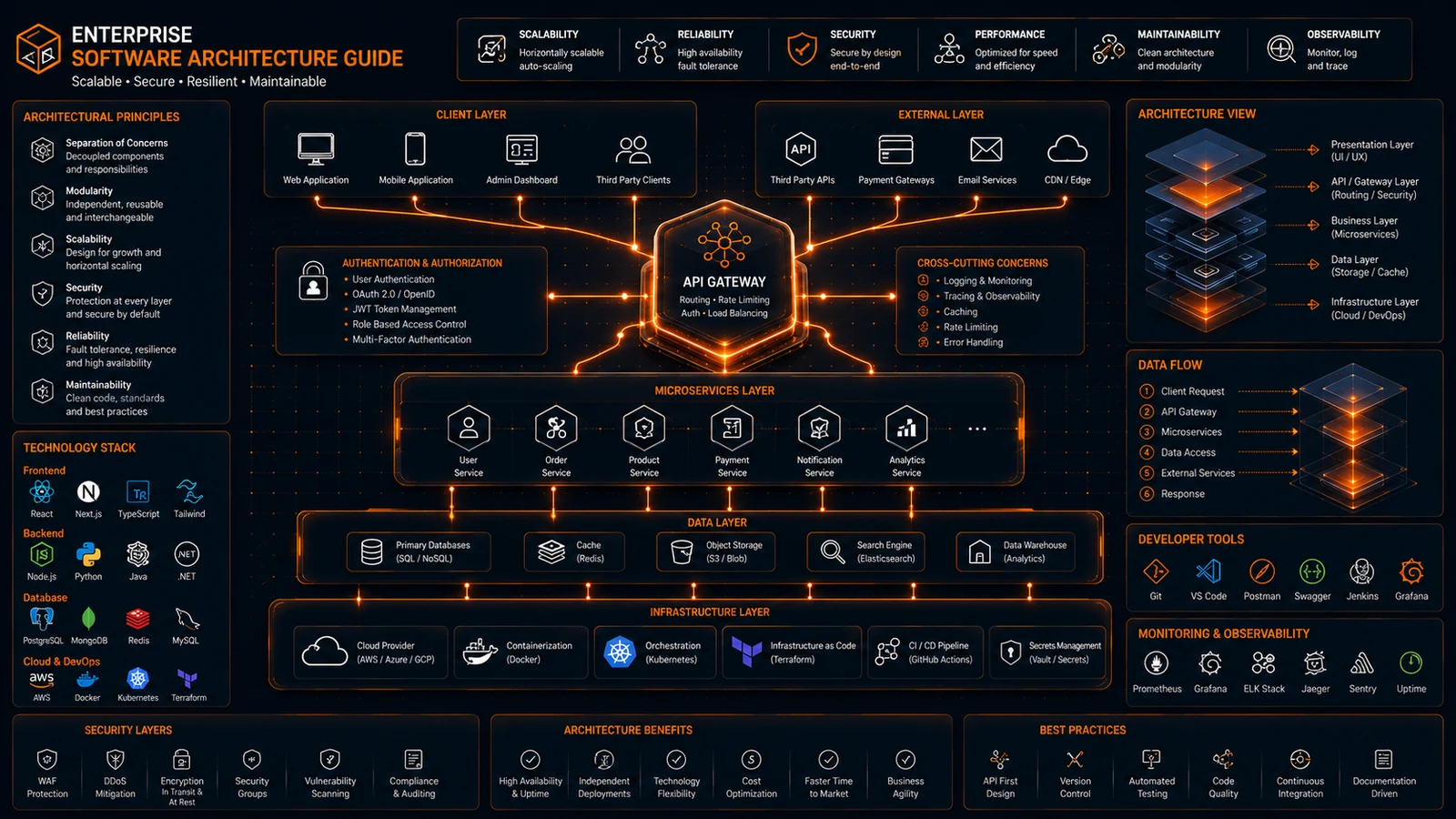
Software architecture is the foundation of every successful application. Whether you’re building a startup MVP, SaaS platform, mobile app backend, or enterprise system, architectural decisions influence scalability, performance, maintainability, and development speed.
Many projects fail not because of poor code, but because of poor architectural planning. As applications grow, technical debt accumulates and systems become difficult to maintain.
A strong software architecture provides structure, consistency, and flexibility for future growth.
In this guide, you’ll learn the core principles of software architecture, common architectural patterns, and practical strategies for designing scalable applications.
What Is Software Architecture?
Software architecture is the high-level structure of a software system. It defines how components, services, databases, APIs, and modules interact to achieve business goals.
Good architecture improves scalability, maintainability, and performance.
Why It Matters
Software architecture determines:
- Application scalability
- System reliability
- Development speed
- Team collaboration
- Future maintenance costs
Poor decisions early can create long-term challenges.
Example
Large platforms such as Netflix, Amazon, and Spotify rely on carefully designed architectures to support millions of users.
Why Is Software Architecture Important?
Software architecture creates a blueprint for development. It helps teams organize code, reduce complexity, and support future growth.
It allows developers to make consistent technical decisions.
Key Benefits
Better Scalability
Applications can grow without major redesigns.
Easier Maintenance
Systems remain manageable over time.
Improved Collaboration
Teams work within a shared structure.
Faster Development
Developers spend less time solving organizational problems.
What Are the Main Components of Software Architecture?
Software architecture consists of application layers, business logic, databases, APIs, infrastructure, and communication patterns.
Each component has a specific responsibility.
Core Components
Presentation Layer
Handles user interfaces and user interactions.
Business Logic Layer
Processes application rules and workflows.
Data Layer
Stores and retrieves information.
API Layer
Facilitates communication between systems.
Infrastructure Layer
Manages hosting, deployment, and cloud resources.
Result
Clear separation improves maintainability and scalability.
What Is Layered Architecture?
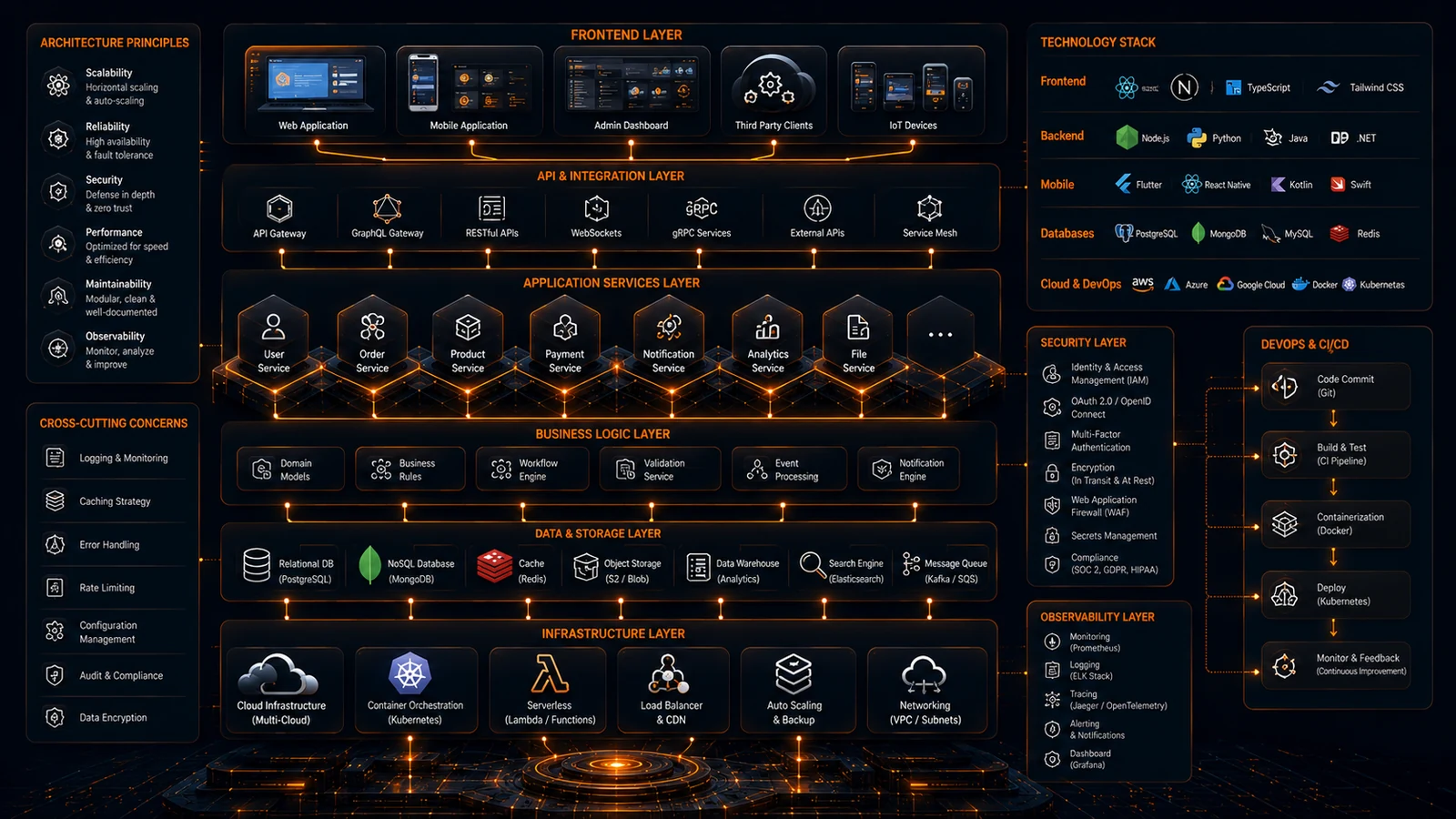
Layered Architecture organizes software into distinct layers, each responsible for a specific function within the application.
Typical Layers
- Presentation Layer
- Business Logic Layer
- Data Access Layer
- Database Layer
Advantages
Easy to Understand
Developers quickly grasp application flow.
Better Separation
Responsibilities remain isolated.
Easier Testing
Each layer can be tested independently.
Common Use Cases
- Web applications
- Enterprise software
- Internal business systems
What Is Microservices Architecture?
Microservices Architecture divides an application into small independent services that communicate through APIs.
Each service focuses on a specific business function.
Example
- User Service
- Payment Service
- Notification Service
- Analytics Service
Benefits
Independent Deployment
Services can be updated separately.
Better Scalability
Individual services scale independently.
Improved Reliability
Failures remain isolated.
Challenges
Microservices increase operational complexity and require strong DevOps practices.
How Does Project Structure Support Software Architecture?
Project structure translates architectural decisions into organized folders, modules, and files.
A good structure makes architecture visible and easier to maintain.
Example
src/
├── components/
├── services/
├── api/
├── database/
├── middleware/
├── utils/
└── tests/
Why It Matters
Developers interact with project structure every day.
Well-organized projects reinforce architectural standards.
Real Example
Most successful React, Next.js, Node.js, Python, and WordPress projects follow consistent structural patterns.
What Common Software Architecture Mistakes Should You Avoid?
Common architecture mistakes include tight coupling, poor separation of concerns, inconsistent standards, and lack of scalability planning.
Mistake 1: Monolithic Business Logic
Avoid placing all functionality in a few files.
Mistake 2: Tight Dependencies
Components should remain loosely coupled.
Mistake 3: No Scalability Plan
Design systems with future growth in mind.
Mistake 4: Inconsistent Structure
Apply standards across the entire codebase.
Result
Applications remain maintainable and easier to evolve.
Can AI Help Design Better Software Architecture?
Yes. AI tools can recommend architectural patterns, generate project structures, and help developers apply best practices more consistently.
Benefits
Faster Planning
Generate architecture foundations quickly.
Better Consistency
Apply proven patterns automatically.
Reduced Setup Time
Move from idea to implementation faster.
Original Insight
Most architecture problems begin before development starts. Teams often spend days deciding how to organize projects, services, and modules. While every application has unique requirements, successful software architectures share common organizational principles. Automating project structure generation helps developers implement those principles immediately.
This is why tools like ProFolderAI help teams establish clean foundations before writing code.
Expert Perspective
Architecture represents the significant design decisions that shape a system, where significant is measured by cost of change.
— Grady Booch, Software Engineer and Software Architecture Pioneer
Good architecture reduces the cost of future changes.
Conclusion
Software architecture is one of the most important factors in long-term project success. It influences scalability, maintainability, development speed, and operational efficiency.
By applying architectural principles early and organizing projects properly, developers can build systems that remain manageable as they grow.
Whether you’re creating a startup MVP or an enterprise platform, investing in architecture today prevents technical debt tomorrow.
Call to Action
Generate scalable project structures instantly with ProFolderAI and start building applications on a solid architectural foundation.
Open the generator See plans & pricing →
ProFolderAI is part of PostaraAI — a suite of AI-powered tools for developers, creators, and small businesses.
About this article
- Written and maintained by the ProFolderAI team, part of PostaraAI.
- Published June 14, 2026 · Updated June 24, 2026.
- Questions or corrections? Contact the team.

Bineesh Koyente Thodika is the founder of ProFolderAI and PostaraAI. He builds AI-powered developer tools, WordPress solutions, and software products that help developers, agencies, and indie hackers launch projects faster.
Keep reading
File Structure Best Practices for Effective Project Management
Learn file structure best practices to maintain organized projects, enhancing collaboration and efficiency for developers and teams.
Folder Structure Best Practices for Developers and Teams
Discover folder structure best practices to enhance project organization. Improve collaboration and efficiency with clear guidelines.
Mastering Software Project Folder Structure for Success
Crafting a solid software project folder structure enhances organization and efficiency. Learn best practices to streamline your development workflow.